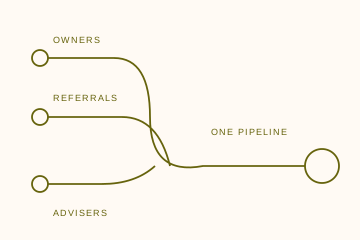
Write the business model in one sentence before you search. Then pull names from where operators list themselves: trade association directories, trade-show exhibitor lists, state licensing databases, and your own customer and supplier lists, with NAICS codes and M&A databases as a first screen. Expect 30 to 50 names on the first pass and a verified shortlist of 15 to 20.
Write the business model before the search query
"Healthcare services" is a sector, not a search. A manufacturer, a software vendor, and a maintenance company all show up under it, and only one fits your operating plan.
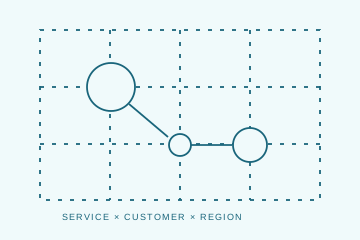
Suppose you want independent providers of on-site equipment maintenance for outpatient clinics in the Southeast. That sentence names the service, the customer, and the region. Now write the exclusions: manufacturers with a service arm, national dealers, hospital in-house teams.
A good brief lets a second researcher say why a company belongs on the list and why a similar one does not. If your brief cannot do that, fix it before you open a database.
Where do niche companies list themselves?
Niche operators rarely describe themselves with your words. They do list themselves where their customers look. Work these sources in this order:
- Trade association member directories. Most associations publish a member list or a supplier guide. For medical equipment service, start with AAMI.
- Trade-show exhibitor lists. Exhibitor lists go public months before the show and include the small operators. One regional show can add 20 names.
- State licensing databases. Contractors, home health agencies, pest control, elevator service, and medical waste haulers all hold state licenses. The board search is free and returns the legal entity and address.
- Customer and supplier lists. Ask your operating team who they lose bids to and who buys the same parts. A regional distributor knows every service shop in its territory.
- Map searches. Search "medical equipment repair" plus a city on Google Maps. Operators with no marketing still have a map listing.
Record which source found each company. When a query returns distributors instead of service providers, change the words before you widen the search.
Use NAICS codes and M&A databases as a first screen
NAICS code 811210 covers electronic and precision equipment repair, so it returns copier repair shops next to clinic equipment service. Use the Census NAICS search to find the two or three codes that touch your brief, then screen every hit against the business model. A code says what a company filed, not what it sells.
In our experience, Grata, SourceScrub, and PitchBook find the 10 largest names in a niche in an hour and miss most operators under about $5 million in revenue. Acquisition announcements in the niche show which platforms are already buying and which independents remain.
AI research tools speed up the vocabulary step: ask for source links and require missing facts to be marked unknown. The AI deal sourcing guide explains what those tools verify and what they guess.
Verify a small batch before adding more names
Verify the first 10 names before you add name 11. That check tells you whether the brief and the vocabulary work. Save one record per company:
Candidate record
- Company and website
- Parent or owner (check whether several brands share one owner)
- Service evidence: the page that shows the work
- Customer evidence: who they name as clients
- Region evidence: offices or service area
- Size signal: headcount, technicians, locations, or revenue if published
- Source and date found
- Stage: discovered, fit verified, or owner interest confirmed
- Next question
"The service page confirms on-site maintenance for clinics. Two regional offices. Ownership unknown." is a record the next researcher can act on. "Excellent fit" is not.
Expect the counts to fall at each step. A first pass of 30 to 50 names from directories and exhibitor lists grows to about 100 after map searches and databases. Verification cuts that to 15 to 20 companies that fit, and three to five owners take a call in the first quarter.
Keep discovered, fit verified, and owner interest separate
Use three stages:
- Discovered. A source says the company might belong in the market.
- Fit verified. Current operating evidence matches the brief.
- Owner interest confirmed. An owner or representative has agreed to discuss a transaction.
No AI summary, database record, or website moves a company to stage three. Only a conversation does.
Report stage counts to your CEO, not the raw list size. "100 discovered, 18 fit, 4 owners talking" is a different message from "100 targets."
The search fund sourcing guide covers the owner outreach that turns stage two into stage three.
Stop adding names when new searches return companies already on the list. Spend that time verifying the names you have.
Where PrivSource fits: direct research finds companies that are not for sale. Buy-side access adds the ones that are. Qualified buyers state their criteria once and receive matched lower middle market deals from advisors and owners. Keep those deals on their own list, because they arrive with owner interest already confirmed.