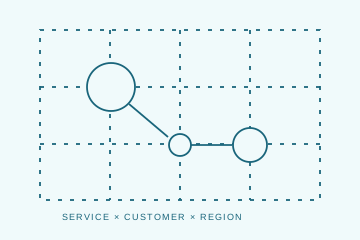
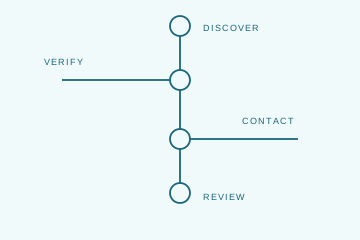
Start with what the platform cannot do today, not with an industry. Write that gap as one sentence: a service, a customer group, or a territory. Then look for businesses that fill exactly that gap. Set size and integration limits before you collect names, and have your operating team confirm the two companies could actually run together.
Write down the gap the add-on fills
"Expand industrial services" gives a researcher nothing to search for. "Add inspection technicians who can serve our maintenance customers between scheduled visits" does. It names the service, the customer, and the reason.
Get that sentence from the platform's operating leader, not the deal team. Ask one question: what could we sell or deliver the day after closing that we cannot today?
Bain's 2024 buy-and-build analysis lists the usual reasons to combine businesses: new customer segments, geographies, channels, and capabilities. Pick one before you pick a target.
Set the limits before you collect names
Split must-haves from nice-to-haves. A required license is a must-have. A neighboring state may be fine if the service routes still work.
Name the size measure: revenue, EBITDA, or technician count. An employee estimate from a database is a clue, not a number. Write "unknown" and note who will confirm it.
Then add the limit most buyers forget: what your team can absorb. Suppose your operators can take on a new branch but cannot replace a founder who holds every customer relationship. Owner dependence is then a screening question, right next to geography.
Look beside the platform, not across the industry
The best add-ons often sit next to the platform. Look at suppliers, service partners, the competitor that wins the jobs you lose, and the shop you hand overflow work to. Ask your field managers who they run into. They know names no database has.
The niche-target guide covers directories, licensing databases, and search terms. Use it to build the list. Use the worksheet below to record why each name belongs.
For each company, save the page that shows the work: a service page, not a directory category. Send the same one-sentence gap to the brokers and advisors you work with, so marketed deals get screened the same way.
Test whether the two businesses can run together
Before anyone builds a combined model, answer four questions. Who sells the new service? Can the crews share routes? Which systems have to change? Who on your team owns each answer?
BDC's due diligence guide splits the later work into commercial, financial, and legal checks. Your early screen does not replace that work. It tells diligence what it has to prove.
Add-on fit worksheet (one row per target)
- Gap filled: the service, customer group, or territory it adds
- Geography: where coverage improves
- Size: the measure, the period, and the source
- Integration: what has to change, and who owns it
- Evidence: the page or conversation behind the fit
- Next step: who confirms the biggest unknown, and by when
Make the first contact about the biggest unknown
For a marketed business, call the advisor. For a company that is not for sale, find the owner and lead with why the two businesses fit. Do not assume they want to sell.
Ask about your biggest unknown first. If the deal only works when the owner stays for two years, ask that before you request three years of financials. The guide to how buyers screen deals shows how to keep that first review short.
Where PrivSource fits: buy-side access sends qualified buyers lower middle market deals matched to their criteria. Apply with the gap sentence and the limits you wrote above. Then screen what arrives with the same worksheet you use for direct research.